What is EMDR?
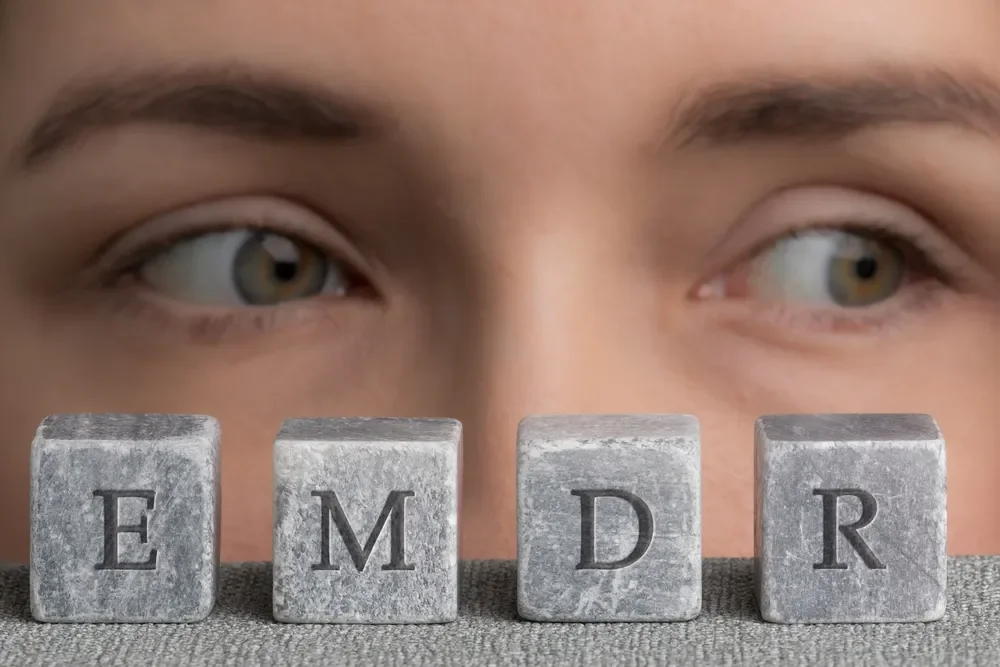
EMDR (Eye Movement Desensitization and Reprocessing) therapy is a trauma-focused therapy that helps the brain process difficult or distressing experiences that may still feel “stuck.”
When we experience something overwhelming, our brains don’t always process and store the memory in the usual way. Sometimes, even long after an event has passed, certain memories, emotions, body sensations, or beliefs can continue to feel very present. You may find yourself reacting strongly to situations that remind you of the past, feeling anxious or on edge, struggling with intrusive memories, or carrying beliefs such as “I’m not safe,” “It was my fault,” or “Something is wrong with me.”
EMDR uses bilateral stimulation (BLS) —such as guided eye movements, alternating sounds, or tapping—to support the brain’s natural processing system while you gently revisit aspects of a difficult experience. The goal is not to erase the memory, but to help you remember what happened without it continuing to have the same emotional or physical hold over you.
EMDR can be helpful for trauma and PTSD, but it may also be used to address anxiety, grief, phobias, disturbing experiences, relationship patterns, and other experiences that continue to affect your present life.
You remain in control throughout the process. We move at a pace that feels manageable for you, and we spend time building safety, coping skills, and emotional regulation before processing difficult material.
You don't have to forget what happened to heal from it. EMDR therapy can help your past become something you remember, rather than something you continue to relive.
